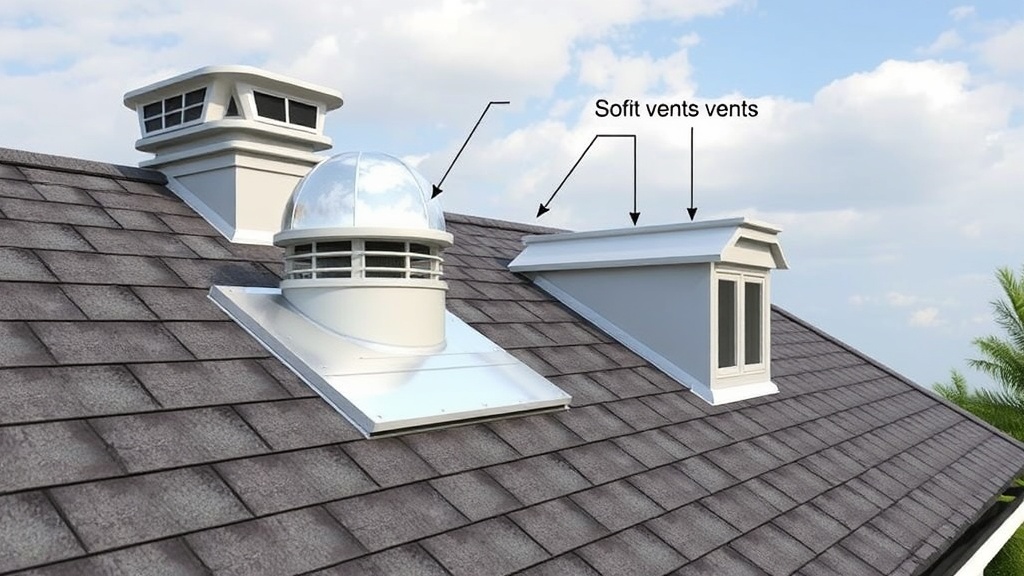
Roof Ventilation Milwaukee – Ridge Vent & Soffit Vent Upgrades
Prevent Ice Dams & Extend Your Roof's Life
Proper roof ventilation isn't optional in Wisconsin. It's the difference between a roof that lasts 20 years and one that fails in 10.
Holland Exteriors provides attic ventilation installation and repair in Milwaukee and surrounding areas. Our attic ventilation installation includes ridge vent installation, soffit vent installation, balanced roof ventilation, and powered attic fan options for ice dam prevention and longer roof life. Licensed, insured, BBB A+ rated. Call (414) 340-3890 for a free assessment.
The House That Ate Shingles
Mark Johnson bought a house on Downer Avenue. Beautiful 1920s home. New roof five years ago. But every winter, massive ice dams. Every summer, his attic hit 140 degrees.
He called us because shingles were curling. After just five years. The previous contractor had installed a beautiful new roof. But zero ventilation. The attic couldn't breathe.
Heat and moisture were cooking his roof from underneath.
We showed him the problem with thermal imaging. His attic was 35 degrees warmer than it should be in winter. Snow on his roof melted from below, ran down, and froze at the eaves. Ice dams every time.
We installed proper ventilation: continuous ridge vent at the peak, soffit vents at the eaves. Created a pathway for air to flow from bottom to top. Natural convection doing what it's supposed to do.
That was three winters ago. No ice dams. His cooling bills dropped 20%. And his shingles stopped deteriorating prematurely.
Why Attic Ventilation Matters (Balanced Roof Ventilation)
Prevents Ice Dams
Keeps your attic cold in winter so snow doesn't melt from below. No melting means no ice dams, no water backup, no interior damage.
Reduces Heat Buildup
Summer attic temperatures can hit 150°F without ventilation. That heat cooks your shingles from underneath, causing premature aging and failure.
Removes Moisture
Bathrooms, kitchens, and daily living create moisture. Without ventilation, it condenses in your attic, causing mold, rot, and insulation damage.
Extends Roof Life
Proper ventilation can add 5-10 years to your roof's life. Most shingle warranties require adequate ventilation to remain valid.
Ventilation Systems We Install
Ridge Vents
Continuous ventilation along the peak of your roof. Hot air rises naturally and exits through the ridge. Works with soffit vents to create continuous airflow. Nearly invisible from the ground.
Soffit Vents
Intake vents under your roof overhangs. Cool air enters here and travels up through the attic. Must be clear and unblocked by insulation to work properly.
Gable Vents
Vents on the ends of your home. Good for cross-ventilation. Often combined with other systems for optimal airflow.
Powered Attic Fans
Electric or solar-powered fans that actively pull hot air out. Good for homes where passive ventilation isn't sufficient. Thermostat-controlled for efficiency.
Signs Your Ventilation Is Inadequate
- Ice dams every winter
Classic sign of heat escaping into your attic
- High summer cooling bills
Superheated attic makes your AC work overtime
- Curling or buckling shingles
Heat from below causes premature aging
- Frost in your attic during winter
Moisture condensing because it can't escape
- Mold or mildew in your attic
Trapped moisture creates perfect conditions for growth
- Rusty nails poking through roof decking
Condensation causing rust from inside
The Right Ventilation Formula
Building code requires 1 square foot of ventilation for every 150 square feet of attic space. But that's the minimum. In Wisconsin's climate, we often recommend more.
The ventilation must be balanced: 50% intake (soffit vents) and 50% exhaust (ridge or gable vents). Unbalanced ventilation is almost as bad as no ventilation.
We calculate the exact ventilation needs for your specific home. Not a one-size-fits-all approach.
Types of Roof Ventilation Systems
Effective roof ventilation requires both intake and exhaust components working together. Understanding your options helps you make informed decisions about improving your home's ventilation.
Exhaust Ventilation (Where Hot Air Exits)
Ridge Vents
Continuous vents installed along the entire roof ridge. This is our preferred exhaust ventilation for most Milwaukee homes because:
- Creates uniform ventilation across the entire roof
- Nearly invisible from ground level
- No moving parts to fail
- Works with natural convection (hot air rises)
- Can be added during roof replacement or as a retrofit
Static Box Vents (Roof Louvers)
Individual vents installed on the roof surface. Effective but require multiple units for adequate ventilation:
- Good for roofs where ridge vents aren't practical
- Can be added to existing roofs without major work
- Must be properly distributed across the roof
- Multiple units needed for adequate exhaust
Powered Attic Fans
Electric or solar-powered fans that actively pull air from the attic:
- Good for extreme heat situations
- Thermostat or humidistat controlled
- Solar models require no electrical work
- Must have adequate intake vents to work properly
- Can create negative pressure if intake is insufficient
Gable Vents
Triangular or rectangular vents on the gable ends of your home. Traditional but less effective than ridge/soffit systems:
- Rely on wind rather than convection
- Good supplemental ventilation
- Can conflict with ridge vent systems
- Already present on many older Milwaukee homes
Intake Ventilation (Where Cool Air Enters)
Soffit Vents (Continuous or Individual)
The most important and often neglected component. Located in the soffit (underside of roof overhang):
- Continuous soffit vents: Perforated panels along entire soffit; best airflow
- Individual soffit vents: Circular or rectangular vents spaced along soffit
- Must be clear of insulation to function
- Often blocked or insufficient in older homes
Intake Is Critical
Without adequate intake, exhaust vents cannot function properly. We frequently find homes with good ridge vents but inadequate soffit ventilation—the ridge vent draws air from inside the house instead of the soffit, wasting heating/cooling dollars.
Signs of Poor Roof Ventilation
Poor ventilation causes problems in both summer and winter. Here are the warning signs that indicate your Milwaukee home may need ventilation improvements:
Winter Warning Signs
- Ice dams forming at roof edges: The #1 sign of ventilation problems. Heat escaping into the attic melts snow, which refreezes at cold eaves
- Icicles hanging from gutters: Same cause as ice dams—uneven roof temperatures from escaping heat
- Frost in the attic: Moisture from the living space condenses and freezes on cold attic surfaces
- Wet or damp insulation: Moisture buildup in the attic damages insulation effectiveness
- Condensation on windows in upper floors: Can indicate excess moisture that's also affecting the attic
Summer Warning Signs
- Extremely hot attic (over 120°F): Poorly ventilated attics can reach 150°F+
- High cooling bills: Superheated attic radiates heat into living space, making AC work harder
- Upstairs rooms hotter than downstairs: Heat from attic penetrating ceiling insulation
- AC running constantly: System struggling to overcome heat gain from above
- Curling or buckling shingles: Excessive heat from below causes shingles to age prematurely
Year-Round Warning Signs
- Mold or mildew in attic: Trapped moisture creates perfect conditions for growth
- Musty odors from attic: Sign of moisture problems and potential mold
- Rusty nails poking through roof decking: Moisture condensing on cold metal
- Paint peeling on exterior walls near roofline: Moisture escaping through walls
- Roof aging faster than expected: Shingles failing before their rated lifespan
The Cost of Ignoring Ventilation Problems
Poor ventilation causes compounding damage: ice dam repairs, premature roof failure, higher energy bills, mold remediation, and insulation replacement. Fixing ventilation problems costs a fraction of what you'll pay for these consequences.
How Much Ventilation Does Your Roof Need?
Building codes provide minimum requirements, but Milwaukee's climate—with extreme cold winters and humid summers—often demands more. Here's how to understand your ventilation needs:
The Basic Ventilation Formula
Code minimum: 1 square foot of net free area (NFA) for every 150 square feet of attic floor space.
With vapor barrier: Can reduce to 1:300 ratio if vapor retarder is installed and ventilation is properly balanced.
Example: A 1,500 sq ft attic needs minimum 10 sq ft of ventilation—5 sq ft intake (soffit) and 5 sq ft exhaust (ridge).
Note: Wisconsin's climate often requires exceeding these minimums. We calculate requirements for each home individually.
The Balance Requirement
Total ventilation area matters less than proper balance. The ideal ratio:
- 50% intake (soffit vents)
- 50% exhaust (ridge/roof vents)
Unbalanced ventilation causes problems:
- Too much exhaust, not enough intake: Creates negative pressure; can pull conditioned air from living space
- Too much intake, not enough exhaust: Hot air can't exit; defeats the purpose of ventilation
- Mixed exhaust systems: Using both ridge vents and gable vents can "short circuit" airflow
Factors That Increase Ventilation Needs
Some homes need more than the minimum:
- Dark colored roofs: Absorb more heat, require more exhaust capacity
- Complex roof geometry: Valleys and dormers may create "dead spots" with poor airflow
- Low-slope roofs: Less natural convection; may need powered ventilation
- Finished attic space: Requires special ventilation strategies
- Home with history of ice dams: May benefit from increased ventilation
- Multiple HVAC vents in attic: More duct leakage adds to heat/moisture load
Our Assessment Process
We don't guess at ventilation needs. Our assessment includes:
- Measuring actual attic square footage
- Counting and measuring existing vents
- Checking for blocked soffit vents
- Thermal imaging to identify problem areas
- Calculating your specific ventilation requirements
- Recommending the most effective, cost-efficient solution
Roof Ventilation Improvement Cost
Ventilation improvements are among the most cost-effective upgrades you can make to your home. The investment typically pays for itself through reduced energy costs and prevented damage.
Typical Ventilation Improvement Costs
| Service | Price Range | Details |
|---|---|---|
| Ridge Vent Installation | $800 - $1,500 | Full ridge on standard home |
| Soffit Vent Addition | $300 - $800 | Depends on amount needed |
| Static Box Vents | $75 - $150 each | Installed; typically need 4-8 vents |
| Gable Vent Installation | $200 - $400 | Per vent including framing |
| Powered Attic Fan | $500 - $1,000 | Electric model, installed |
| Solar Attic Fan | $400 - $800 | No electrical work needed |
The Return on Investment
Proper ventilation pays for itself through:
- Reduced cooling costs: 10-25% savings on summer AC bills
- Extended roof life: 5-10 additional years before replacement needed
- Prevented ice dam damage: Thousands saved on repair costs
- Avoided mold remediation: Moisture control prevents costly remediation
- Preserved insulation: Dry insulation maintains R-value
Sample ROI Calculation
Investment: $1,200 for ridge and soffit vent system
- Annual cooling savings: $200
- Prevented ice dam (avg): $1,500/occurrence
- Extended roof life (5 years at $22,000): $3,666/year value
The ventilation system pays for itself within the first year when you factor in avoided ice dam costs and extended roof life.
Best Time to Add Ventilation
While ventilation can be added anytime, the most cost-effective time is during roof replacement. At that point:
- Ridge vent installation is included in the scope of work
- Soffit access is often easier with contractors already mobilized
- Underlayment can be properly integrated with ventilation
- Total cost is significantly lower than separate projects
Frequently Asked Questions About Roof Ventilation
Get Your Ventilation Assessed for Free
We'll measure your attic, calculate your ventilation needs, and show you exactly what's required.
Call (414) 340-3890