Roof Flashing Repair Milwaukee – Chimney & Step Flashing
Stop Leaks Around Chimneys, Vents & Skylights
Most roof leaks don't come from bad shingles. They come from failed flashing. We fix it right the first time.
Holland Exteriors provides roof flashing repair and installation in Milwaukee and surrounding areas. Our roof flashing repair covers chimney flashing repair, step flashing installation, counter flashing, valley flashing replacement, and drip edge to stop leaks at every roof transition. Licensed, insured, BBB A+ rated. Call (414) 340-3890 for a free assessment.
The $18,000 Quote for a $900 Problem
Sarah Thompson had water stains on her ceiling. Right next to the chimney. She called a roofing company. They came out, looked around for twenty minutes, and gave her a quote.
$18,000. Full roof replacement. "Your roof is old," they said. "These leaks mean it's time."
Then Sarah called us. Jaime Holland went up with his camera. Showed her exactly what was happening: The flashing where the chimney meets the roof had pulled away. Water was running down the chimney, under the shingles, and into her attic.
"It's the flashing. Not your roof. This is a $900 repair."
We removed the old flashing, installed new step flashing and counter flashing, sealed everything properly. Two guys, four hours. Sarah's roof had another ten years in it.
That was four years ago. Zero leaks. Her ceiling is repainted. And she saved $17,100 by getting an honest assessment.
Common Flashing Problems We Fix (Chimney Flashing Repair & Step Flashing Installation)
Chimney Flashing
The most common source of roof leaks. Step flashing and counter flashing must work together. When one fails, water gets in. We replace both correctly.
Vent Pipe Flashing
Rubber boots around vent pipes crack and deteriorate over time. Water seeps in slowly, causing hidden damage. Simple replacement prevents expensive rot.
Skylight Flashing
Skylights need proper flashing on all four sides. Poor installation causes leaks that look like they're coming from the skylight itself.
Valley Flashing
Where two roof planes meet, water concentrates. Valley flashing takes the brunt of water flow. Must be installed with proper underlayment and sealed correctly.
Signs Your Flashing Has Failed
- Water stains near chimneys or walls
Discoloration on ceilings or walls adjacent to penetrations
- Visible rust or corrosion on metal flashing
Flashing deteriorates over time, especially if improperly installed
- Separated or lifted flashing
Gaps between flashing and roof surface or chimney allow water entry
- Cracked or missing caulk
Sealant deteriorates faster than metal, creating entry points for moisture
- Leaks only during heavy rain or snow melt
Water finds its way through compromised flashing under pressure
How We Install Flashing Correctly
Step 1: Remove Old Flashing Completely
We don't patch over failing flashing. We remove it, inspect the substrate for damage, and start fresh.
Step 2: Install Proper Underlayment
Ice and water shield goes under the flashing. This creates a secondary barrier that prevents leaks even if the flashing eventually fails.
Step 3: Layer the Flashing Correctly
Each piece must overlap properly so water flows over, not under. Step flashing weaves with shingles. Counter flashing covers the step flashing.
Step 4: Seal Every Joint
Quality sealant at every connection point. Not visible caulk that deteriorates, but proper roofing sealant applied where it matters.
Types of Roof Flashing: Step, Valley & Chimney
Different roof features require different flashing types. Understanding what's on your roof helps you identify problems and understand repair recommendations. Here are the main types of flashing we install and repair:
Chimney Flashing (Step & Counter)
Chimney flashing is the most complex and failure-prone flashing on any roof. It requires two separate components working together:
- Step flashing: Individual L-shaped pieces installed under each shingle row, stepping up the chimney as the shingle courses rise
- Counter flashing: Metal embedded into chimney mortar joints that laps over the step flashing
- Chimney cricket: A small peaked structure behind wide chimneys that diverts water around the chimney
Common failure point: Many contractors skip step flashing entirely, using only sealant. This always fails within a few years.
Pipe Boot Flashing
Plumbing vent pipes penetrate your roof and need waterproof seals:
- Rubber boot flashing: Flexible rubber collar that seals around the pipe; most common and affordable
- Split boot flashing: Can be installed without removing the pipe; used for repairs
- Metal pipe collars: More durable than rubber but require sealant maintenance
Common failure point: Rubber boots crack and deteriorate after 8-12 years, especially on south-facing roof slopes with more sun exposure.
Valley Flashing
Where two roof slopes meet, water concentrates and flows with force:
- Open valley: Metal flashing visible between shingle edges; most durable option
- Closed-cut valley: Shingles from one slope run across the valley, cut flush on the other side
- Woven valley: Shingles from both slopes woven together; common but less durable
Best practice: Open metal valleys with ice and water shield underneath provide the longest-lasting protection in Milwaukee's climate.
Other Essential Flashing Types
- Drip edge: L-shaped metal along roof edges that directs water into gutters and protects fascia
- Wall flashing: Where roof meets a vertical wall (dormers, second stories); similar to chimney step flashing
- Skylight flashing: Custom metal pieces around all four sides of skylights
- Headwall flashing: Where a lower roof meets a wall above it
- Apron flashing: Single piece of flashing at the base of chimneys and walls
Flashing Materials
We use various metals depending on the application and your roof type:
- Aluminum: Most common; affordable, corrosion-resistant, easy to work with
- Galvanized steel: Strong but can rust over time if coating is damaged
- Copper: Premium option; beautiful patina, extremely long-lasting (50+ years)
- Lead: Traditional choice for chimney counter flashing; very malleable and long-lasting
Signs of Flashing Failure
Flashing failures are responsible for the majority of roof leaks. Because flashing is at transition points—the most vulnerable areas of your roof—failure here quickly leads to water damage. Here's what to watch for:
Visual Signs (Exterior)
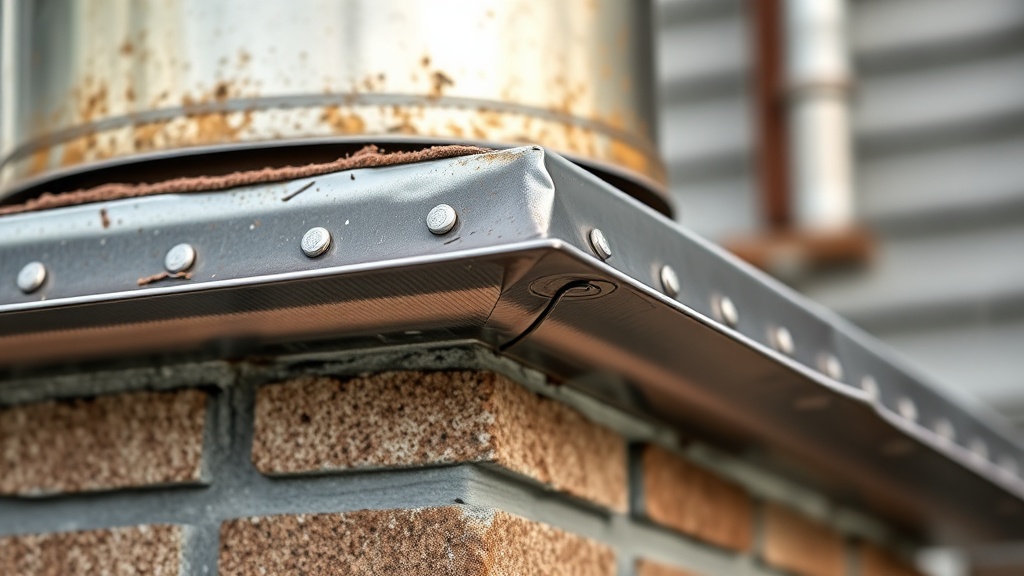
- Rust or corrosion: Orange or brown discoloration on metal flashing indicates breakdown
- Lifted or bent sections: Flashing should lie flat; lifting creates entry points for water
- Separated joints: Gaps between flashing pieces or between flashing and roof surface
- Missing pieces: Wind can blow away deteriorated flashing sections
- Cracked or missing sealant: Black caulk visible around flashing shouldn't be the primary water barrier, but missing sealant indicates maintenance needed
- Daylight visible from attic: Any light coming through at flashing points indicates gaps
Water Damage Signs (Interior)
Leaks from flashing often show up in predictable locations:
- Water stains near chimney: Brown or yellow discoloration on ceiling near chimney pass-through
- Wet spots on walls: Where interior walls meet the roofline
- Attic moisture: Wet insulation, stained rafters, or mold near penetrations
- Leaks during specific conditions: Flashing leaks often occur only during heavy rain, wind-driven rain, or snow melt
- Rotted wood: Soffit or fascia damage near the roof edge may indicate drip edge flashing failure
Age-Related Concerns
Even without visible problems, age affects flashing:
- Rubber pipe boots: Replace every 10-15 years, sooner if cracked
- Caulk and sealants: Typically fail within 5-10 years
- Galvanized steel: Can rust through after 15-20 years
- Aluminum: Lasts 20-30 years but connections loosen over time
- Chimney mortar: If mortar joints are failing, counter flashing embedded in them loses its seal
Don't Ignore Flashing Problems
A small flashing repair might cost $200-$500. The water damage from ignoring that repair can cost $5,000-$20,000. Rotten decking, destroyed insulation, mold remediation, ceiling repairs, ruined possessions—all because a $300 repair wasn't addressed when first noticed.
Flashing Repair vs Replacement
Not every flashing problem requires complete replacement. However, the wrong approach—patching what should be replaced—leads to recurring leaks and wasted money. Here's how we determine the right solution:
When Repair Is Appropriate
- Sealant has failed but metal is intact
- Minor separation that can be re-secured
- Single pipe boot replacement
- Flashing is less than 10 years old
- Localized damage from debris impact
- Flashing was properly installed originally
Typical repair cost: $150 - $500
When Replacement Is Necessary
- Rust or corrosion has weakened the metal
- Original installation was improper
- Multiple areas of failure
- Flashing is over 15-20 years old
- Repeated repairs haven't solved the problem
- During roof replacement
Typical replacement cost: $500 - $1,500
The Caulk-Only Trap
Many roofers—especially inexperienced ones—address flashing leaks by adding more caulk. This is a temporary fix that fails within 1-3 years. Signs you've received caulk-only repairs:
- Thick black caulk visible from the ground around your chimney
- Multiple layers of caulk built up over time
- Caulk bridging gaps instead of metal overlapping properly
- Leak returns after previous "repairs"
Proper flashing installation uses caulk only as a secondary sealant—the metal itself should be the primary water barrier. If you can see significant caulk from the ground, the installation is likely inadequate.
What Proper Chimney Flashing Replacement Includes
When we replace chimney flashing, here's what you should expect:
- Complete removal of old flashing
- Inspection of underlying decking for rot damage
- Installation of ice and water shield around the chimney base
- New step flashing woven with shingles
- Counter flashing embedded into mortar joints (not just surface-mounted)
- Cricket installation behind chimneys wider than 30 inches
- Proper sealant at all connection points
Flashing Repair Cost in Milwaukee
Flashing repair is one of the most cost-effective roof repairs you can make. The cost is minimal compared to the damage prevented.
Typical Flashing Repair & Replacement Costs
| Service | Price Range | Details |
|---|---|---|
| Sealant Repair | $150 - $300 | Re-seal existing flashing, minor fixes |
| Pipe Boot Replacement | $75 - $200 | Per boot, includes sealing |
| Chimney Flashing Repair | $300 - $600 | Partial repair, re-seal, minor replacement |
| Chimney Flashing Replacement | $700 - $1,500 | Complete step & counter flashing |
| Skylight Flashing Repair | $300 - $800 | Depends on skylight size and accessibility |
| Valley Flashing Repair | $400 - $900 | Per valley, includes shingle work |
| Wall Flashing Replacement | $300 - $800 | Where roof meets walls |
Factors That Affect Cost
- Accessibility: Steep roofs or high areas require safety equipment and take longer
- Chimney size: Larger chimneys require more flashing material and labor
- Underlying damage: If decking or sheathing is rotted, that repair adds cost
- Material choice: Copper costs more than aluminum or galvanized steel
- Cricket installation: Adding a chimney cricket (often needed) increases the job scope
The Cost of Ignoring Flashing Problems
Compare flashing repair costs to the cost of water damage:
- Ceiling drywall repair: $200 - $800
- Insulation replacement: $500 - $2,000
- Rafter/deck repair: $500 - $3,000
- Mold remediation: $1,500 - $10,000+
- Damaged possessions: Variable, potentially thousands
Total potential damage from ignored flashing leak: $5,000 - $20,000+
A $500 flashing repair now prevents $10,000 in damage later. It's one of the best investments you can make in protecting your home.
Frequently Asked Questions About Roof Flashing
Have a Leak? We'll Find It and Fix It Right
Free leak assessment. We'll show you exactly what's wrong and what it takes to fix it properly.
Talk to a Roofer: (414) 340-3890