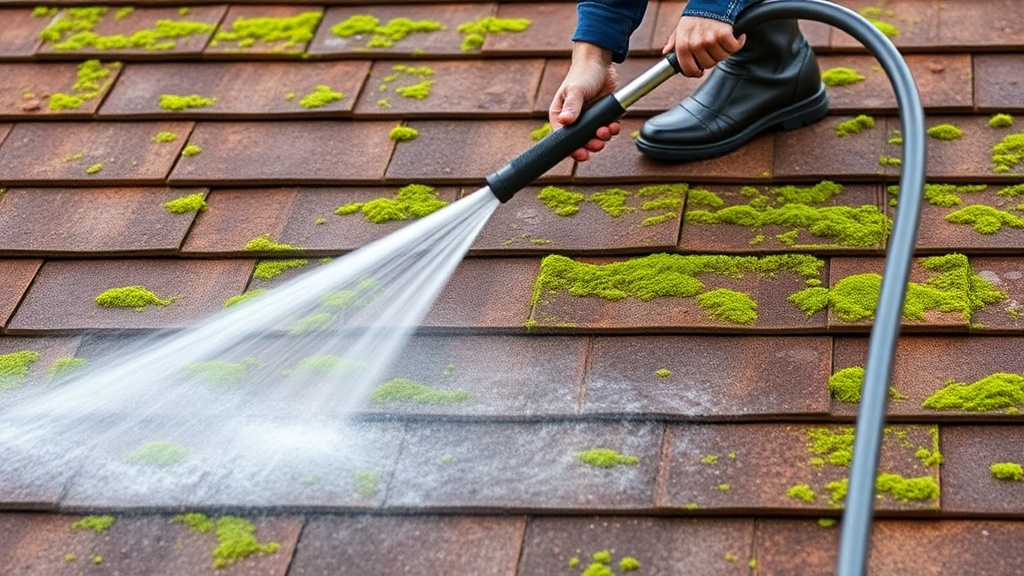
Roof Cleaning Milwaukee – Soft Wash Moss & Algae Removal
Those Black Streaks Aren't Just Ugly. They're Eating Your Roof.
Algae and moss don't just look bad. They actively destroy your shingles.
Holland Exteriors provides professional roof cleaning services in Milwaukee and surrounding areas. For roof cleaning in Milwaukee, our roof cleaning service includes moss removal, algae removal, soft wash roof cleaning, roof stain removal, and gutter cleaning to protect shingles. We use soft wash roof cleaning for roof stain removal, moss removal, and algae control without damaging shingles. Licensed, insured, BBB A+ rated. Call (414) 340-3890 for a free assessment.
The Roof That Died Early
Linda Patterson noticed black streaks on her roof in 2018. She thought it was just dirt. Cosmetic. Nothing serious.
By 2020, the streaks had spread. The north side of her roof was dark. Green patches appeared. Moss started growing in the valleys.
By 2022, her 12-year-old roof needed full replacement.
The manufacturer rated those shingles for 30 years. Linda got 12. Because algae and moss don't just sit on your roof. They actively break down the protective granules on your shingles. They hold moisture against the roof surface. They lift shingle edges. They rot.
Professional roof cleaning in 2018 would have cost $400. Linda paid $19,000 for a new roof instead. Because she didn't know those black streaks were alive and eating her investment.
What We Remove From Your Roof: Moss, Algae & Roof Stain Removal
Gloeocapsa Magma (Black Algae)
Those black streaks are cyanobacteria that feed on limestone filler in shingles. They retain moisture and accelerate roof aging.
Moss Growth
Moss grows in shaded areas, lifts shingles, holds water, and causes rot. Common on north-facing slopes in Milwaukee.
Lichen
Harder to remove than moss. Sends roots into shingles. Requires professional treatment to eliminate without damage.
Organic Debris
Leaves, twigs, seed pods. They trap moisture, clog valleys, and create perfect conditions for algae and moss.
Tree Sap & Pollen
Sticky residue that attracts dirt, holds moisture, and provides nutrients for algae growth.
Mold & Mildew
Grows in consistently damp areas. Discolors shingles and indicates moisture problems that need addressing.
Why Pressure Washing Will Destroy Your Roof
Never Pressure Wash an Asphalt Shingle Roof
We've replaced dozens of roofs damaged by pressure washing. High-pressure water strips the protective granules off your shingles. It voids your warranty. It can reduce your roof's lifespan by 10+ years.
We use low-pressure soft washing with EPA-approved biodegradable solutions. It kills algae and moss without damaging your shingles. This is the method recommended by every major shingle manufacturer.
Our Safe Roof Cleaning Process
Roof Inspection
We inspect before cleaning. Check for damage. Identify problem areas. Make sure your roof is in condition to be cleaned safely.
Soft Wash Treatment
Low-pressure application of cleaning solution. Kills algae, moss, and lichen at the roots. Gentle on shingles. Effective on growth.
Debris Removal
Clear gutters, valleys, and roof surface. Remove leaves, branches, and organic material that holds moisture.
Preventive Treatment
Optional zinc or copper strips that prevent future algae growth. Protects your investment for years.
When Should You Clean Your Roof?
- When You See Black Streaks
Don't wait for them to spread. Clean early before algae damages your shingles
- When Moss Appears
Moss lifts shingles and causes leaks. Remove it as soon as you notice growth
- Every 3-5 Years Preventively
Even if your roof looks clean, preventive cleaning extends its life and maintains appearance
Signs Your Milwaukee Roof Needs Cleaning
Many homeowners don't realize their roof needs cleaning until the problem becomes severe. Here are the warning signs to watch for—and why each one matters for your roof's longevity.
Visual Indicators of Roof Growth
Black Streaks (Algae)
Dark streaks running down your roof—especially visible on lighter colored asphalt shingles—indicate Gloeocapsa magma colonization. This cyanobacteria:
- Feeds on the limestone filler in asphalt shingles
- Creates a protective dark coating that holds moisture against the roof
- Spreads rapidly, especially during warm, humid summers
- Accelerates granule loss, reducing shingle life by 10-15 years if untreated
Green Fuzzy Patches (Moss)
Green, carpet-like growth—most common on north-facing slopes and shaded areas—indicates moss colonization. Moss is more damaging than algae because it:
- Develops root-like structures that penetrate and lift shingles
- Holds significant moisture against the roof surface
- Creates pathways for water infiltration beneath shingles
- Causes rotting of underlying roof decking in severe cases
Gray-Green Crusty Patches (Lichen)
Lichen—a combination of algae and fungus—appears as crusty, raised patches. Lichen is the most difficult organic growth to remove because it:
- Bonds tightly to shingle surfaces with root-like structures
- Damages shingles when scraped off improperly
- Requires multiple treatments to fully eliminate
- Indicates long-term moisture conditions that may signal other problems
Other Warning Signs
- Excessive granules in gutters: While some granule loss is normal, heavy accumulation indicates accelerated shingle deterioration—often caused by organic growth
- Discolored patches: Dark areas that differ from the normal roof color can indicate mold, mildew, or moisture retention
- Curling or lifting shingles: Moss growing under shingle edges can cause them to lift, creating leak pathways
- Increased energy bills: Dark algae absorbs more heat, raising attic temperatures and cooling costs
Milwaukee-Specific Risk Factors
Milwaukee's climate creates ideal conditions for roof growth:
- Humid summers promote algae and moss growth
- Large mature trees provide shade that moss loves
- Lake Michigan humidity increases moisture exposure
- North-facing roof slopes rarely get direct sunlight
Roof Cleaning Methods Compared
Not all roof cleaning methods are equal. The wrong approach can cause more damage than the growth you're trying to remove. Here's what you need to know about each method:
✓ Soft Washing (Recommended)
The method we use and the only approach approved by major shingle manufacturers like GAF, Owens Corning, and CertainTeed.
How it works:
- Low-pressure application (same pressure as a garden hose)
- Biodegradable cleaning solution kills algae, moss, and lichen at the cellular level
- Solution does the work, not water pressure
- Safe for all shingle types and won't void warranties
Results:
- Algae dies immediately—dark streaks disappear within days
- Moss may take 2-4 weeks to fully release, then washes away naturally
- Results last 3-5 years with no damage to roofing materials
✗ Pressure Washing (Avoid)
Despite being commonly offered, pressure washing causes severe damage to asphalt shingles.
Why it's harmful:
- Strips protective granules from shingles (the same granules that protect against UV damage)
- Can drive water under shingles, causing leaks
- Damages shingle edges and breaks adhesive seals
- Voids most manufacturer warranties
We've replaced roofs where pressure washing took 10+ years off the expected lifespan.
⚠ Manual Removal (Limited Use)
Physical scraping or brushing of moss and debris has a place, but must be done carefully:
- Appropriate for heavy moss accumulation before soft washing
- Must use soft brushes only—no wire brushes or scrapers
- Work downward (with the shingle overlap) to avoid lifting edges
- Does not kill roots—regrowth will occur without chemical treatment
We sometimes use gentle manual removal for severe moss before soft wash treatment.
Prevention Options
After cleaning, preventive measures can extend results significantly:
- Zinc strips: Installed along ridge, release zinc ions during rain that inhibit algae growth
- Copper strips: Similar to zinc but more effective; more expensive
- Algae-resistant shingles: When replacing your roof, consider shingles with copper granules built in
- Tree trimming: Reducing shade allows more sunlight and airflow to reach the roof
Roof Cleaning Cost in Milwaukee
Professional roof cleaning is one of the best investments you can make in your roof's longevity. Compare the cost of cleaning to the $15,000-$25,000 cost of premature roof replacement, and the math is clear.
Typical Roof Cleaning Prices
| Service | Price Range | Details |
|---|---|---|
| Basic Soft Wash | $300 - $450 | 1,500-2,000 sq ft roof, light algae |
| Standard Soft Wash | $400 - $600 | 2,000-3,000 sq ft roof, moderate growth |
| Heavy Growth Treatment | $500 - $800 | Severe moss/lichen, may need multiple treatments |
| Large/Complex Roof | $600 - $1,000+ | 3,000+ sq ft, steep pitch, multiple levels |
| Preventive Strips Install | $200 - $400 | Zinc or copper strips along ridge (add-on) |
Factors Affecting Cost
- Roof size: Larger roofs require more solution and time
- Roof pitch: Steeper roofs require safety equipment and take longer
- Severity of growth: Heavy moss or lichen may require multiple treatments
- Accessibility: Landscaping, fencing, or building location can affect access
- Additional services: Gutter cleaning and debris removal if needed
The ROI of Roof Cleaning
Consider the true cost comparison:
- Professional cleaning every 4 years: ~$450 × 7 cleanings over 30 years = $3,150 total
- Roof lasting full 30-year lifespan: One roof replacement at $22,000
- Total cost with maintenance: $25,150
- No cleaning: $0 in cleaning costs
- Roof replaced at year 15: $22,000 + $22,000 = $44,000
- Total cost without maintenance: $44,000
Savings from regular cleaning: Nearly $19,000 over 30 years
How Often Should You Clean Your Roof?
Cleaning frequency depends on your specific situation. Here's a guide based on local conditions and roof characteristics:
Recommended Cleaning Schedule
| Condition | Frequency | Why |
|---|---|---|
| Full sun exposure | Every 5-7 years | UV light naturally inhibits growth |
| Partial shade | Every 3-5 years | Moderate growth conditions |
| Heavy shade (mature trees) | Every 2-3 years | Ideal conditions for moss and algae |
| North-facing slopes | Every 2-4 years | Less direct sunlight |
| With preventive strips | Every 5-8 years | Zinc/copper inhibits regrowth |
Best Time of Year for Roof Cleaning
In Milwaukee, certain seasons work better for roof cleaning:
- Spring (April-May): Good time before summer humidity accelerates growth. Roof is accessible after winter.
- Early Fall (September-October): Clean before winter preparation. Moderate temperatures are ideal for cleaning solutions.
- Summer (June-August): Can be done but scheduling around rain is important. Heat can affect solution effectiveness.
- Winter: Generally not recommended—freezing temperatures prevent proper treatment.
Signs It's Time for Another Cleaning
- New dark streaks appearing after previous cleaning
- Green patches (moss) becoming visible again
- Roof color noticeably different from when last cleaned
- Neighbors with similar conditions have visible growth on their roofs
Include Cleaning in Your Maintenance Plan
The easiest approach: add roof cleaning to your regular maintenance schedule. During our twice-yearly roof inspections, we assess whether cleaning is needed. This catches growth early—when treatment is easiest and least expensive—and ensures your roof always looks its best and lasts its longest.
Frequently Asked Questions About Roof Cleaning
Stop Algae and Moss Before They Destroy Your Roof
Professional soft washing. Safe for your roof. Tough on growth. Protect your investment today.
Talk to a Roofer: (414) 340-3890