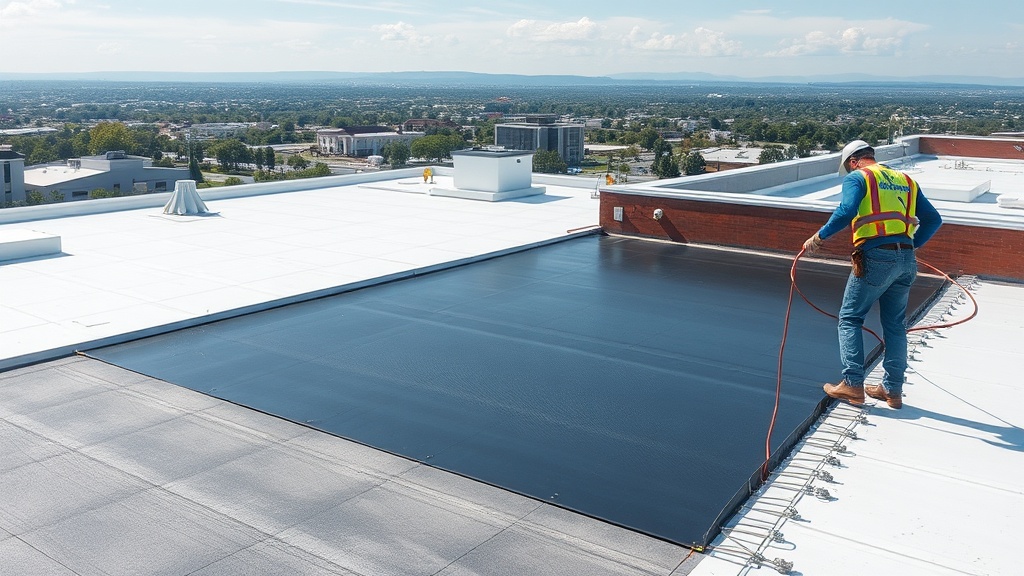
Flat Roofing Milwaukee – EPDM, TPO & PVC Systems
Flat Roofing That Actually Stays Flat
Commercial and residential flat roof installation and repair. EPDM, TPO, PVC, and modified bitumen systems installed right the first time.
Holland Exteriors provides flat roof installation and repair in Milwaukee and surrounding areas. For flat roofing in Milwaukee, we provide flat roof repair, flat roof replacement, TPO roofing, EPDM rubber roof systems, modified bitumen, and commercial flat roofing solutions. We handle flat roof replacement, low-slope roofing, and restoration coatings for commercial and residential buildings. TPO, EPDM, and modified bitumen systems for long-term durability. Licensed, insured, BBB A+ rated. Call (414) 340-3890 for a free assessment.
The Flat Roof That Wasn't Flat
Dave Chen bought a commercial building on Lincoln Avenue. Previous owner said the flat roof was "recently redone." Three months later, Dave called us about ponding water.
We climbed up. The roof membrane looked new. But it had been installed over a deck that wasn't level. Water pooled in three different areas. Every time it rained, those pools sat there. Degrading the membrane. Creating weak spots.
"It looks new, but it's failing because the installation was wrong."
The previous contractor had saved money by not addressing the deck. Put down a beautiful EPDM membrane over a problematic substrate. Dave was looking at a complete tear-off within five years instead of the twenty he should have gotten.
We told him the truth. Showed him what needed to happen. Fixed the deck slope, installed proper drainage, then put down the membrane correctly. That was six years ago. No ponding. No leaks. No problems.
Types of Flat Roofing Systems: EPDM, TPO, PVC & Modified Bitumen
Modern flat roofing has come a long way from the old tar-and-gravel days. Today's single-ply membranes offer superior performance, easier installation, and longer warranties. Here's what we install and when each system makes sense:
EPDM (Ethylene Propylene Diene Monomer)
The "rubber roof" that's been protecting commercial buildings for over 50 years. EPDM is a synthetic rubber membrane that's extremely durable and cost-effective.
Best for: Commercial buildings, low-slope residential additions, garages, and warehouses.
Pros: Proven 30+ year track record, handles thermal movement well, easy to repair, cost-effective.
Cons: Black absorbs heat (though white EPDM is available), seams are adhered rather than welded.
Lifespan: 25-30 years with proper maintenance.
TPO (Thermoplastic Polyolefin)
The rising star of commercial roofing. TPO combines the durability of EPDM with the heat-welded seams of PVC at a lower cost.
Best for: Commercial buildings prioritizing energy efficiency, new construction, retail and office buildings.
Pros: Heat-welded seams are stronger than adhesive, white surface reflects UV and reduces cooling costs, competitively priced.
Cons: Newer technology (less long-term data than EPDM), quality varies by manufacturer.
Lifespan: 20-30 years.
PVC (Polyvinyl Chloride)
The premium single-ply option. PVC offers superior chemical resistance and the strongest heat-welded seams in the industry.
Best for: Restaurants (grease resistance), chemical plants, hospitals, buildings with significant rooftop equipment.
Pros: Best chemical/grease resistance, fire resistant, heat-welded seams, highly reflective.
Cons: Highest cost of single-ply options, can become brittle in extreme cold without proper plasticizers.
Lifespan: 25-30+ years.
Modified Bitumen
An evolution of traditional built-up roofing. Modified bitumen uses asphalt-based sheets with added polymers for flexibility and strength.
Best for: High-traffic roofs, rooftop decks, buildings requiring regular roof access, projects needing multi-layer protection.
Pros: Excellent waterproofing, handles foot traffic well, can be torch-applied or cold-adhered, good for complex roof shapes.
Cons: Torch application requires skilled installers, shorter lifespan than single-ply options.
Lifespan: 15-20 years.
What Makes a Flat Roof Installation Successful
Proper Drainage
No truly flat roof should be perfectly flat. We create subtle slopes to prevent ponding water, which is the number one killer of flat roofs.
Quality Substrate
The membrane is only as good as what's underneath. We address deck issues before installing the roofing system, not after.
Attention to Details
Penetrations, edges, and transitions are where most flat roofs fail. We take extra care at every critical point.
Regular Maintenance Plans
Flat roofs need periodic inspection and maintenance. We offer maintenance programs to catch small issues before they become expensive problems.
Flat Roof Cost in Milwaukee
Flat roof costs depend on the membrane type, deck condition, building accessibility, and complexity. Here's what Milwaukee property owners typically pay for complete flat roof replacement:
| System Type | Cost/Sq Ft | 3,000 sq ft Building | Warranty |
|---|---|---|---|
| EPDM (60 mil) | $6–$10/sq ft | $18,000–$30,000 | 15-25 years |
| TPO (60 mil) | $7–$12/sq ft | $21,000–$36,000 | 15-25 years |
| PVC (60 mil) | $9–$15/sq ft | $27,000–$45,000 | 20-30 years |
| Modified Bitumen (2-ply) | $8–$14/sq ft | $24,000–$42,000 | 10-20 years |
What Affects Flat Roof Pricing
- •Deck condition: Rotted or damaged decking adds $2-$5/sq ft for repair or replacement.
- •Insulation: Adding or upgrading insulation to meet energy codes adds $1-$4/sq ft.
- •Drainage improvements: Tapered insulation for proper slope adds $1-$3/sq ft.
- •Penetrations: HVAC units, skylights, pipes, and vents require detailed flashing work.
- •Access: Difficult access (no interior stairwell, busy street) increases labor costs.
- •Membrane thickness: Upgrading from 60 mil to 80 mil adds longevity and about 15-20% to material cost.
Flat Roof Repair vs. Replacement
Repair Makes Sense When:
- • Membrane has 5+ years of life remaining
- • Damage is localized (one area, one seam)
- • Leak source is identifiable and fixable
- • Deck is sound
- Cost: $300-$1,500 for typical repairs
Replacement Needed When:
- • Membrane is aged (cracking, brittleness)
- • Multiple leak points or widespread damage
- • Ponding water has degraded large areas
- • Deck has rotted or structural issues
- Cost: Full replacement per table above
Flat Roof Drainage Solutions
"Flat" roofs aren't actually flat—at least they shouldn't be. Every flat roof needs adequate slope to move water to drains. Ponding water (water that remains 48+ hours after rain) is the #1 cause of flat roof failure.
How We Eliminate Ponding
1. Tapered Insulation Systems
We install rigid insulation boards manufactured with built-in slope (typically 1/4" per foot). This creates positive drainage toward roof drains without modifying the deck structure. The most common solution for re-roofing projects.
2. Interior Drains
Large flat roofs typically use interior drains connected to building plumbing. We ensure proper strainer baskets, overflow drains, and adequate drain count for roof square footage. Clogged or undersized drains cause most ponding issues.
3. Scuppers and Conductor Heads
Openings through parapet walls that drain water to external downspouts. Often used with interior drains as overflow protection. Scuppers should be sized and positioned to handle maximum expected rainfall.
4. Gutter Systems (Perimeter Drainage)
Smaller flat roofs can drain to perimeter gutters if properly sloped. Requires adequate gutter sizing and downspout capacity. Most common on residential flat roof additions.
Signs of Drainage Problems
- Water stains on parapet walls: Indicates water level rises above membrane surface.
- Vegetation growing on roof: Seeds germinate in areas where water sits.
- Visible ponding 48+ hours after rain: Any standing water remaining is a problem.
- Membrane discoloration in patterns: Ring marks showing where water repeatedly sits.
- Soft spots in membrane: Indicates water infiltration and insulation saturation.
Common Flat Roof Problems in Milwaukee
Wisconsin weather is particularly hard on flat roofs. Here are the problems we see most frequently and how we address them:
1. Ponding Water (Most Common)
Water that remains 48+ hours degrades all membrane types. UV rays accelerate deterioration in ponded areas. Winter ponding leads to ice dams at roof edges.
Solution: Install tapered insulation, improve drainage, add or clear drains.
2. Seam Failures
Single-ply membranes are only as good as their seams. Adhesive seams (EPDM) can separate over time. Heat-welded seams (TPO, PVC) can fail if not properly fused during installation.
Solution: Re-weld or re-seal seams. If widespread, membrane replacement may be needed.
3. Punctures and Mechanical Damage
HVAC repairs, dropped tools, foot traffic, and hail all damage flat roof membranes. Single-ply membranes are particularly vulnerable to punctures.
Solution: Patch small punctures with same-material patches. Install walkway pads in traffic areas.
4. Flashing Failures at Penetrations
HVAC units, pipes, vents, and skylights require detailed flashing. These transitions are where most flat roof leaks originate.
Solution: Re-flash with proper membrane boots and sealants designed for your roof type.
5. Membrane Shrinkage
Older EPDM membranes can shrink over time, pulling away from edges and penetrations. This exposes flashing and creates leak points at the perimeter.
Solution: Add membrane strips at affected edges, or replace if shrinkage is severe.
6. Blistering and Bubbles
Moisture trapped under the membrane expands in heat, creating bubbles. This is often caused by installing membrane over a wet deck or poor adhesion.
Solution: Small blisters can be cut, dried, and patched. Large areas may require section replacement.
Flat Roof Maintenance Requirements
Flat roofs require more maintenance than pitched roofs. Debris doesn't slide off, drains can clog, and small problems become big problems faster. Here's how to protect your investment:
Bi-Annual Inspection Checklist
Schedule inspections every spring and fall, plus after major storms:
- Clear debris from membrane surface (leaves, branches, trash)
- Clean drain strainers and check for clogs
- Inspect all seams for separation or lifting
- Check flashing at all penetrations (HVAC, pipes, vents)
- Examine membrane for punctures, tears, or blistering
- Look for ponding water areas (visit during/after rain if possible)
- Inspect coping and parapet walls for damage
- Check scuppers and overflow drains for blockage
Flat Roof Maintenance Programs
We offer commercial flat roof maintenance contracts that include:
Basic Plan
2 inspections/year
Minor repairs included
$400-$800/year
Standard Plan
4 inspections/year
Drain cleaning + minor repairs
$800-$1,500/year
Premium Plan
4 inspections + priority response
All repairs up to $500 included
$1,500-$3,000/year
DIY Maintenance Tips
- •Keep drains clear: Check monthly during fall and after storms. A clogged drain is the fastest path to ponding.
- •Remove debris promptly: Leaves, branches, and trash hold moisture against the membrane.
- •Limit foot traffic: Use designated walkway pads. Every step compresses insulation and stresses the membrane.
- •Protect during HVAC work: Place plywood under equipment being serviced. Most punctures happen during maintenance.
- •Document issues: Take photos of anything unusual. This helps track progression and aids insurance claims.
Frequently Asked Questions About Flat Roofing
Need a Flat Roof That Actually Works?
We'll assess your building, recommend the right system, and install it properly the first time.
Call for Free Consultation: (414) 340-3890